

Cost-Effective Surface Dressing for Roads, Driveways & Rural Access
Tar and chip surface dressing provides a hard-wearing, attractive and cost-effective finish for driveways, private roads, rural access routes and commercial surfaces throughout Cornwall.
Also known as tar and chippings, chip and seal or surface dressing, the process combines a bitumen binder with carefully selected stone aggregate to create a textured surface with excellent grip and a more natural appearance than conventional asphalt.
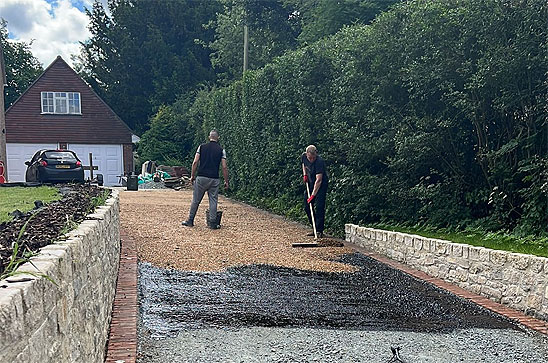
What is Tar & Chip Surface Dressing?
A tar-and-chip surface is created by applying hot bitumen to a prepared surface before covering it with stone aggregate. The aggregate is then rolled firmly into the binder to produce a durable, textured finish.
This versatile method has long been used for UK roads, driveways and access routes. It may also be referred to as tar and stone, tar and granite, chip and seal, seal chip or tar bond.
For customers looking for a smoother traditional finish, we also provide tarmac driveway surfacing in Cornwall.
How is a Tar & Chip Surface Made?
A long-lasting surface starts with proper preparation. Where a completely new surface is required, a suitable aggregate sub-base is prepared and compacted before the bitumen binder is applied.
Selected stone aggregate is spread over the bitumen and rolled into the surface, creating the characteristic textured tar-and-chip finish.
Surface dressing can also be suitable for existing driveways and roads. Before work begins, the surface is cleaned and damaged areas are repaired. Where necessary, our Cornwall pothole repair service can be used to rectify failed sections before resurfacing.
A practical surface with a natural finish.
An economical option for covering larger driveways, roads and access routes.
The textured aggregate finish provides good grip for vehicles and pedestrians.
Particularly well suited to rural properties, estates and countryside settings.
Properly installed surface dressing requires relatively little ongoing maintenance.
Do You Need Drainage with Tar & Chip?
Because the bitumen layer used in tar-and-chip surfacing is impermeable, water needs to be directed to an appropriate drainage area rather than simply being allowed to collect on the surface.
The drainage requirements will depend on the property, existing levels, surrounding ground and where surface water can safely discharge. We assess these factors when surveying the site and can incorporate appropriate drainage and groundworks where required.
Is Tar & Chip Expensive?
Tar-and-chip can be a cost-effective alternative to other surfacing methods, particularly for larger areas such as private roads, long driveways, rural access routes and commercial sites.
The actual cost depends on the size and condition of the area, preparation required, access and the chosen aggregate. We therefore recommend a site survey before providing a quotation.
What Aggregate Can I Choose?
Driveways Cornwall can provide different aggregate finishes to complement the property and surrounding landscape. Popular options include grey granite and naturally coloured stone.
Unlike loose gravel, the aggregate is rolled into the bitumen binder, helping to keep the stone in position while retaining the attractive textured appearance associated with traditional surface dressing.
If you prefer a loose-stone driveway rather than bonded surface dressing, see our gravel driveways in Cornwall.